
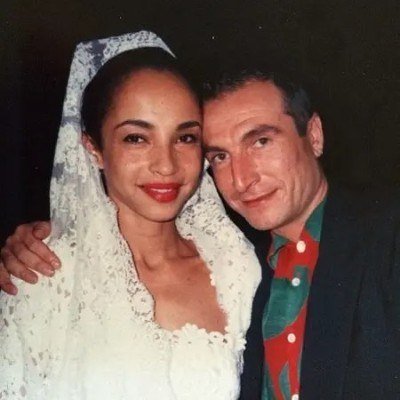
Ask music fans to name Sade Adu’s husband, and most will draw a blank. Yet one man holds that title — and only he ever has. Carlos Scola Pliego, a Spanish filmmaker, married the famously private singer in 1989 and divorced her in 1995. To this day, he remains the only man Sade Adu has ever married.
But reducing Pliego to a celebrity footnote does him a real disservice. Long before the wedding, he had spent a decade learning cinema from the ground up: supervising scripts on Spanish sets, assisting directors on international productions — including a James Bond film — and then striking out on his own to direct documentaries deep in Africa. And yet, for all that, he may be one of the least photographed, least interviewed film professionals of his generation. There is much more to the story than the marriage that made him searchable.
In this article, we lay out what is actually verified about Carlos Scola Pliego: his real filmography, the Bond chapter, his two African documentaries, how he met Sade, why their marriage ended, and — just as importantly — which “facts” about him floating around the internet are simply made up.
Quick Bio
| Full Name | Carlos Scola Pliego (often credited as Carlos Scola) |
| Known For | Spanish filmmaker; the only husband singer Sade Adu has ever had |
| Birth Year | Has never been made public (fan-site claims are unverified) |
| Birthplace | Spain (his career record places him squarely in the Spanish film industry; unverified US claims contradict it) |
| Nationality | Spanish |
| Profession | Assistant director, script supervisor, documentary writer-director |
| Notable Credits | Never Say Never Again (1983), Curse of the Pink Panther (1983), Eleni, Christopher Columbus (1985), Ngira: Gorilas en la montaña (1988), Donde termina el corazón (1989) |
| Spouse | Sade Adu (married 1989 – divorced 1995) |
| Children | None publicly documented |
| Current Status | Not publicly known; last screen credit in 2007 |
Who Is Carlos Scola Pliego?
Carlos Scola Pliego is a Spanish film professional whose career ran from the late 1970s through 2007, moving from script continuity to assistant directing and finally to writing and directing his own documentaries. His name is most often shortened to Carlos Scola in film credits, and the official Sade biography identifies him as a Spanish film director.
To the wider public, he is known for exactly one thing: his marriage to Sade Adu, the Nigerian-British soul singer behind “Smooth Operator,” “The Sweetest Taboo,” and “No Ordinary Love.” It was her only marriage — a fact that has kept Pliego’s name in circulation for more than three decades, long after both the wedding and the film career ended.
What makes him genuinely interesting, though, is the gap between his real résumé and the internet’s version of it. His verified filmography is that of a working craftsman on real sets. The internet’s version adds birthdays, fortunes, and filmographies he never had. This article sticks to what can be verified.
Early Life and Family: The Honest Answer
Here is where honest reporting has to start with a blank page: almost nothing about Carlos Scola Pliego’s early life has ever been made public. His exact date of birth, his parents, his siblings, his education — none of it appears in any authoritative source.
What is confirmed is the professional trail. From 1979 onward, his credits place him firmly inside the Spanish film industry, working his way up through Spanish productions before touching international ones. Claims found on low-quality biography sites — that he was born in the United States, that he was born in 1955, that he is “approximately 70” — are unsupported by his career record and contradicted by more careful reporting. When a filmmaker’s entire working life unfolds in Spain, inventing an American birthplace is a red flag, not a fact.
Starting Out: The Script Supervisor Years
Pliego entered professional filmmaking in the late 1970s through one of the industry’s most demanding invisible jobs: script supervisor. In 1979 he worked on La boda del señor cura, and in 1980 on Opera Prima — jobs that require obsessive attention to continuity: matching actor movements, props, and dialogue across dozens of takes so editors can assemble a seamless film.
It is unglamorous work that teaches a filmmaker everything about how a set actually functions. For a young professional in post-Franco Spain — a period when Spanish cinema was opening up creatively — it was an ideal apprenticeship, and Pliego clearly learned fast.
The Assistant Director Years (1981–1985)
By the early 1980s, Pliego had graduated to assistant directing, and his workload grew sharply. Between 1981 and 1985 he accumulated credits on roughly nine films and television productions, many of them far larger than his public profile would suggest.
His credits from this stretch include the fantasy-adventure Hundra, the action film Black Commando, the World Cup-themed G’olé!, and the Spanish comedy Dos y dos, cinco — plus Eleni, an early dramatic feature that gave John Malkovich one of his first major film roles. In 1985 he served as assistant director on the television miniseries Christopher Columbus, starring Gabriel Byrne and Virna Lisi, and on the video series Scarab.
Assistant directors are the operational backbone of a set: scheduling, coordinating crews, bridging the director’s vision and logistical reality. Handling that role across genres — Spanish dramas one month, international co-productions the next — marked Pliego as a reliable professional in the European film community. For more profiles of fascinating figures from film history, browse our Celebrity section.
The James Bond Chapter: Never Say Never Again
The standout credit of Pliego’s assistant-directing years was the 1983 James Bond film Never Say Never Again, which brought Sean Connery back to the role of 007 with portions filmed on Spanish locations. Pliego served as second assistant director on the Spanish unit — coordinating logistics, schedules, and local crews for a major franchise production.
To be clear about what this means — because some sites inflate it: he did not direct a James Bond movie. He was part of the assistant-directing team handling the Spanish shoot. That is still a significant credit, the kind that proves a filmmaker can operate at the standard major studios demand. The same year, he was also second assistant director on Blake Edwards’ comedy Curse of the Pink Panther.
Two Documentaries From the Heart of Africa
As the 1980s ended, Pliego made his most personal professional move: stepping out from behind other directors to write, direct, and produce his own films. In 1988 he completed Ngira: Gorilas en la montaña, a documentary short about mountain gorilla conservation filmed in what was then Zaire, in the Democratic Republic of the Congo region.
A year later came Donde termina el corazón (1989), a broader feature-length documentary exploring African landscapes, indigenous cultures, and environmental themes around the Ituri Forest and Nairobi. These two films are the closest thing Pliego has to an authorial voice — work chosen and shaped entirely on his own terms, trading controlled studio sets for remote jungle terrain.
His filmography effectively closes with a minor later credit: additional crew work on the 2007 sports drama Goal II: Living the Dream, a project so far removed from his earlier work that it reads more like a footnote than a continuation.
Meeting Sade: Spain, 1985
Pliego and Sade Adu crossed paths in Spain around 1985, while she was there filming a run of music videos with director Brian Ward for her Promise-era material. At the time, Sade was newly and enormously famous — Diamond Life and its inescapable single “Smooth Operator” had made her a global star — and she was living through the particular strain that comes with sudden, total visibility.
The connection reportedly did not turn romantic immediately. It deepened later, after the death of her father, Bisi Adu, and after a grueling promotional tour left her needing distance from London and the machinery of pop stardom. She relocated to Spain, reconnected with Pliego, and — by most accounts — fell hard. Sade herself described the relationship in unusually direct terms for someone so guarded, calling it a period in which she was “madly in love.”
There was a logic to the pairing. Sade was one of the most controlled, most private voices in pop music; Pliego worked with the same instinct — build things carefully, let the work talk, stay out of the frame. Two people from adjacent creative worlds, both allergic to exposure, found each other when she badly needed somewhere quiet to land.
A Short Marriage, a Long Echo (1989–1995)
By 1987, while recording in France, Sade was reportedly already introducing Pliego as her husband — well before any formal ceremony. The wedding itself took place in 1989: IMDb records the date as February 11, while other accounts cite October 11, and no fully authoritative public record settles the discrepancy. What is consistent is that Pliego was present through the making of Sade’s third studio album, Stronger Than Pride, released that same year.
The marriage did not last. Most accounts have the couple separating roughly a year after the wedding, with Sade returning to London. In one of her rare candid comments about the split, she spoke of having to leave quickly, with almost nothing, and said it took years before the sadness stopped defining how she felt day to day. The divorce was not finalized until 1995 — five years after the separation — and the terms of the settlement have never been made public. The couple had no children.
What followed for Sade is well documented: a long recording silence, then 1992’s Love Deluxe, an album widely read by critics and fans as processing exactly this kind of heartbreak, even though she never confirmed the connection outright. What followed for Pliego is almost entirely unknown.
The Myths Competitors Keep Repeating
Because Pliego never gives interviews and has no public presence, content farms have filled the vacuum with invented details — and it is worth naming them, because several rank highly on Google:
The invented age: multiple sites claim he was born in 1955 and is “approximately 70.” No authoritative source supports this. His birth year has never been made public.
The invented fortune: one site estimates his net worth at $70 million. There is no evidence-based public estimate of his wealth whatsoever.
The invented filmography: some articles credit him with auteur-style European art films — titles like La Nuit de l’Océan or El Rastro del Olvido — that do not appear in his verified credit record. His documented directing work consists of the two African documentaries.
The invented birthplace: at least one site claims he was born in the United States. His entire verified career unfolds within the Spanish film industry. When every credible source agrees on one thing about Carlos Scola Pliego, it is that he is Spanish.
Life Away From the Spotlight
Since his last screen credit in 2007, Pliego has remained entirely out of public view. He has never given an interview about his career or his marriage, maintains no verified social media presence, and his current whereabouts, work, and personal life are not documented in any reliable source.
That silence is consistent with everything else about him. He was a behind-the-camera professional before the marriage, stayed one during it, and returned to being one after — until he stepped away from credited film work altogether. Unlike many people adjacent to fame, he never wrote a memoir, never sold a story, never traded on the most famous sentence of his biography.
The Bottom Line
Carlos Scola Pliego’s enduring searchability has little to do with anything he did and everything to do with what he represents: the one confirmed, named, legally recognized husband of an artist who has spent four decades deflecting questions about her personal life. Sade has had other relationships since — including a daughter, Mickailia “Ila” Adu, from a later relationship with musician Bob Morgan — but Pliego occupies a category that has never been repeated.
Strip away the invented birthdays and phantom fortunes, and what remains is a respectable, ordinary-in-the-best-way story: a working Spanish filmmaker who learned the craft from the ground up, stood on a Bond set, made two documentaries on his own terms in Africa, was briefly and painfully married to one of music’s great voices, and then — exactly as he had always intended — disappeared back into private life.
Frequently Asked Questions
Who is Carlos Scola Pliego?
He is a Spanish assistant director and documentary filmmaker, active in the Spanish and international film industry from the late 1970s through 2007. He is best known publicly as the only man singer Sade Adu has ever married.
What films did Carlos Scola Pliego work on?
As an assistant director, he worked on Never Say Never Again (1983), Curse of the Pink Panther (1983), Eleni, the miniseries Christopher Columbus (1985), and others. As a director, he wrote and directed the documentaries Ngira: Gorilas en la montaña (1988) and Donde termina el corazón (1989).
Did Carlos Scola Pliego direct a James Bond movie?
No. He served as second assistant director on the Spanish unit of the 1983 Bond film Never Say Never Again, starring Sean Connery. He did not direct it.
When did Carlos Scola Pliego marry Sade Adu?
In 1989. Sources disagree on the exact date — IMDb lists February 11, while other accounts cite October 11 — and no fully authoritative public record settles it. The divorce was finalized in 1995.
Why did Carlos Scola Pliego and Sade Adu divorce?
The reason has never been made public. The couple separated roughly a year after marrying, with Sade returning to London; the divorce was finalized in 1995. Sade has spoken only briefly about the emotional toll, saying it took years to move past it.
Where is Carlos Scola Pliego now?
Unknown. He has remained entirely out of the public eye since his last film credit in 2007, has never given interviews, and his current whereabouts and activities are not documented in any reliable source.
Did Carlos Scola Pliego and Sade have children?
No. There are no publicly documented children from the marriage. Sade later had a daughter, Mickailia “Ila” Adu, from a relationship with musician Bob Morgan.
